
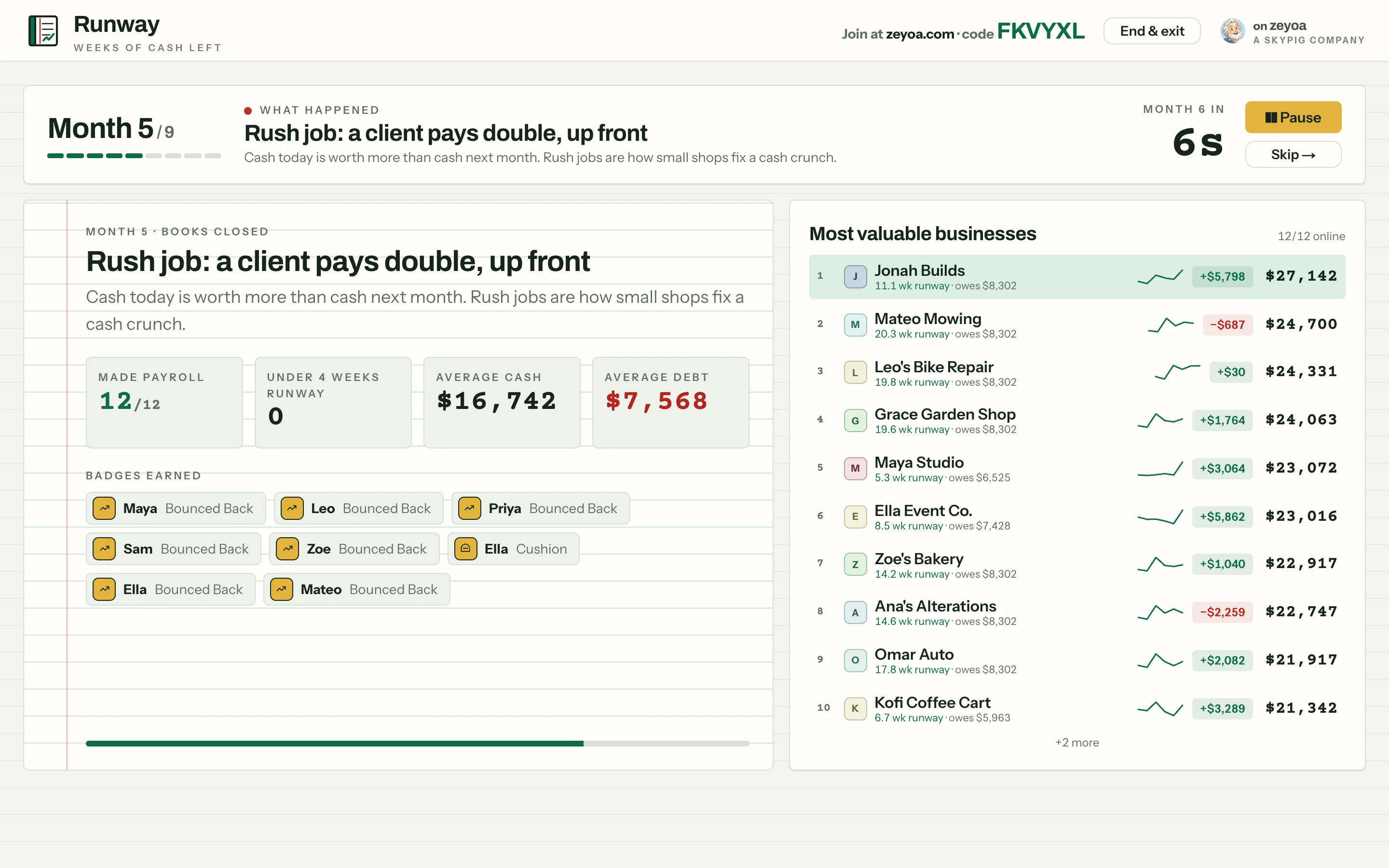
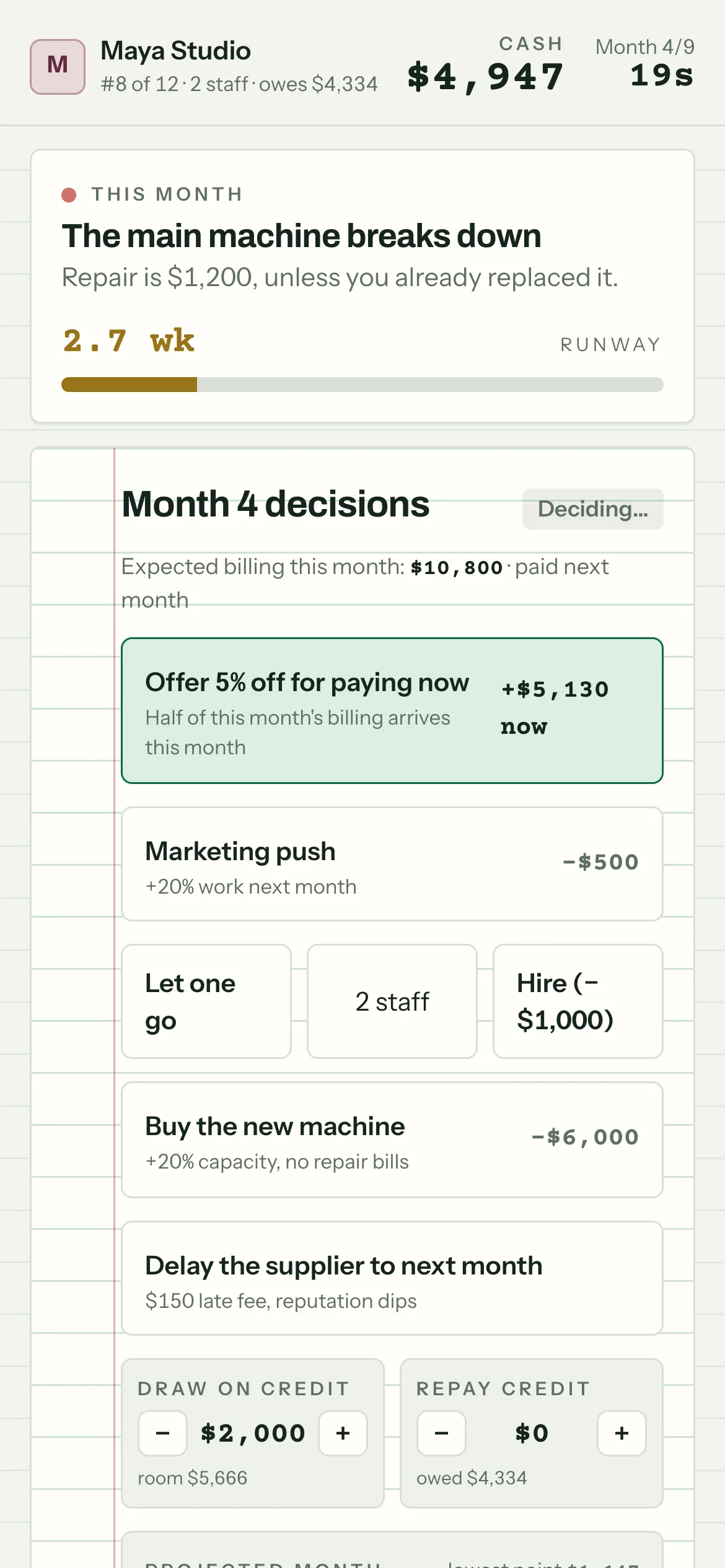
Every student runs the same small design and print shop for a year. Clients pay net-30, payroll is due every two weeks, rent is due on the 1st, taxes land every quarter, and a credit line charges interest. Each month brings a decision and a piece of news: a late client, a big order that needs materials up front, a machine breakdown, a competitor poaching staff. The ledger shows profit and cash side by side, and they disagree.
Screenshots
What students learn
- ✓Profit is on paper; cash is in the bank; businesses die from running out of cash
- ✓How net-30 payment terms create a gap between doing the work and getting paid
- ✓Payroll and rent are due whether or not customers pay on time
- ✓When borrowing is smart, what interest costs, and why taxes surprise people
How it works
- 1Every student runs the same small design and print shop for one year.
- 2Each month brings news and a decision: a late client, a big order that needs materials up front, a broken machine.
- 3Clients pay 30 days later. Payroll, rent and taxes are due on time no matter what.
- 4The ledger on each phone shows profit and cash side by side, and they often disagree.
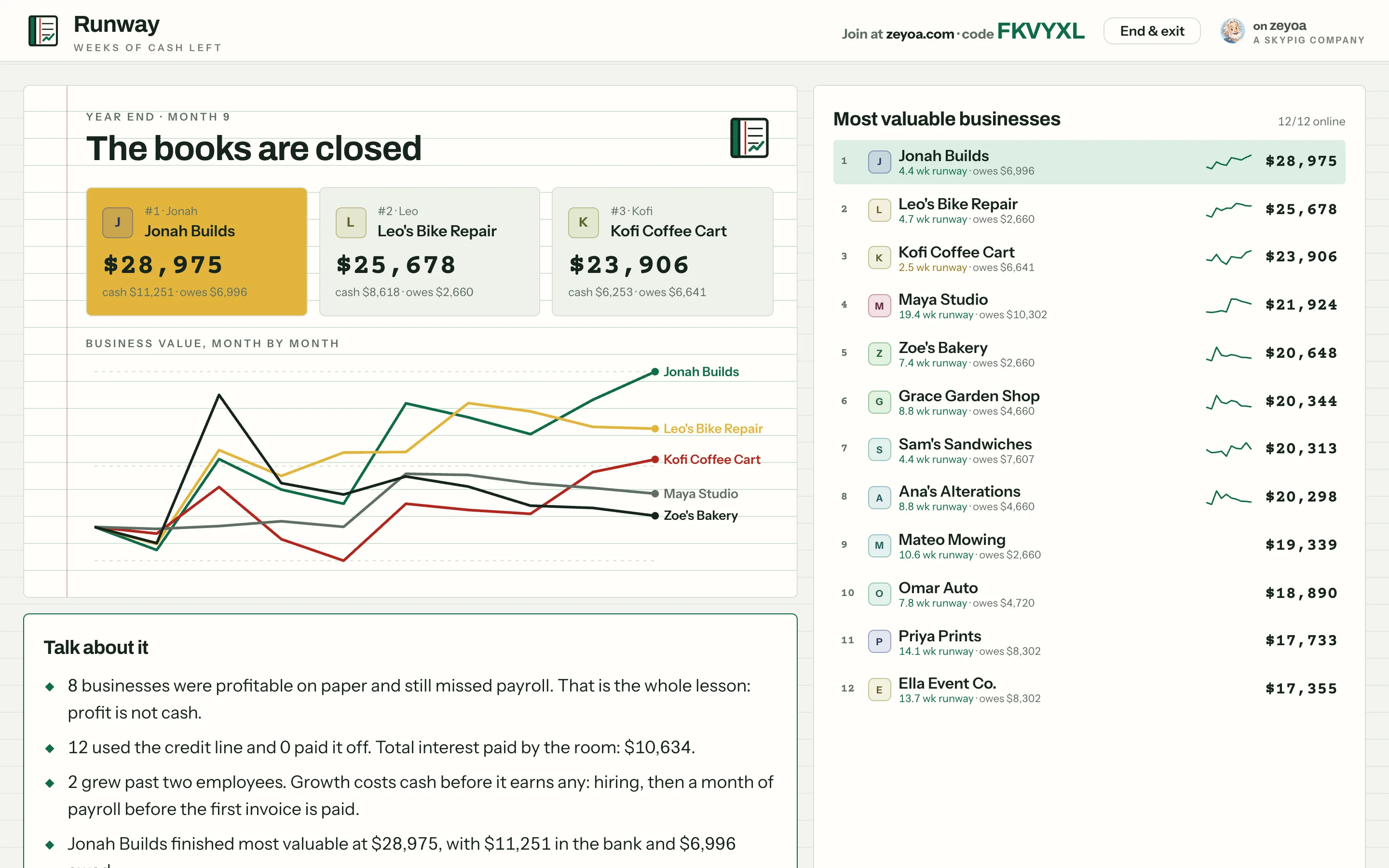
- 5The recap shows who stayed alive, who ran out of cash, and why.
A 27-minute lesson plan
Ask: can a business that's making a profit go broke? Take a vote. Don't give the answer yet.
Play the full year (about 12 minutes).
Retake the vote. Ask a student who was profitable but ran short of cash to explain what happened.
Discussion questions
- What's the difference between profit and cash?
- Why did getting paid in 30 days cause problems even when you had plenty of work?
- When was borrowing on the credit line a smart move? When was it a mistake?
- Which surprise hurt the most, and how could you have planned for it?
Teacher tips
- Great as an opener before a unit on financial statements: students will want to know why their cash disappeared.
Questions teachers ask
Do students need accounting knowledge?+
No. The game teaches the ideas by letting students feel them first. It's a strong lead-in to the vocabulary.
Can one student play alone?+
Yes, it works with a single player as well as a full class.
More answers in the help center.