
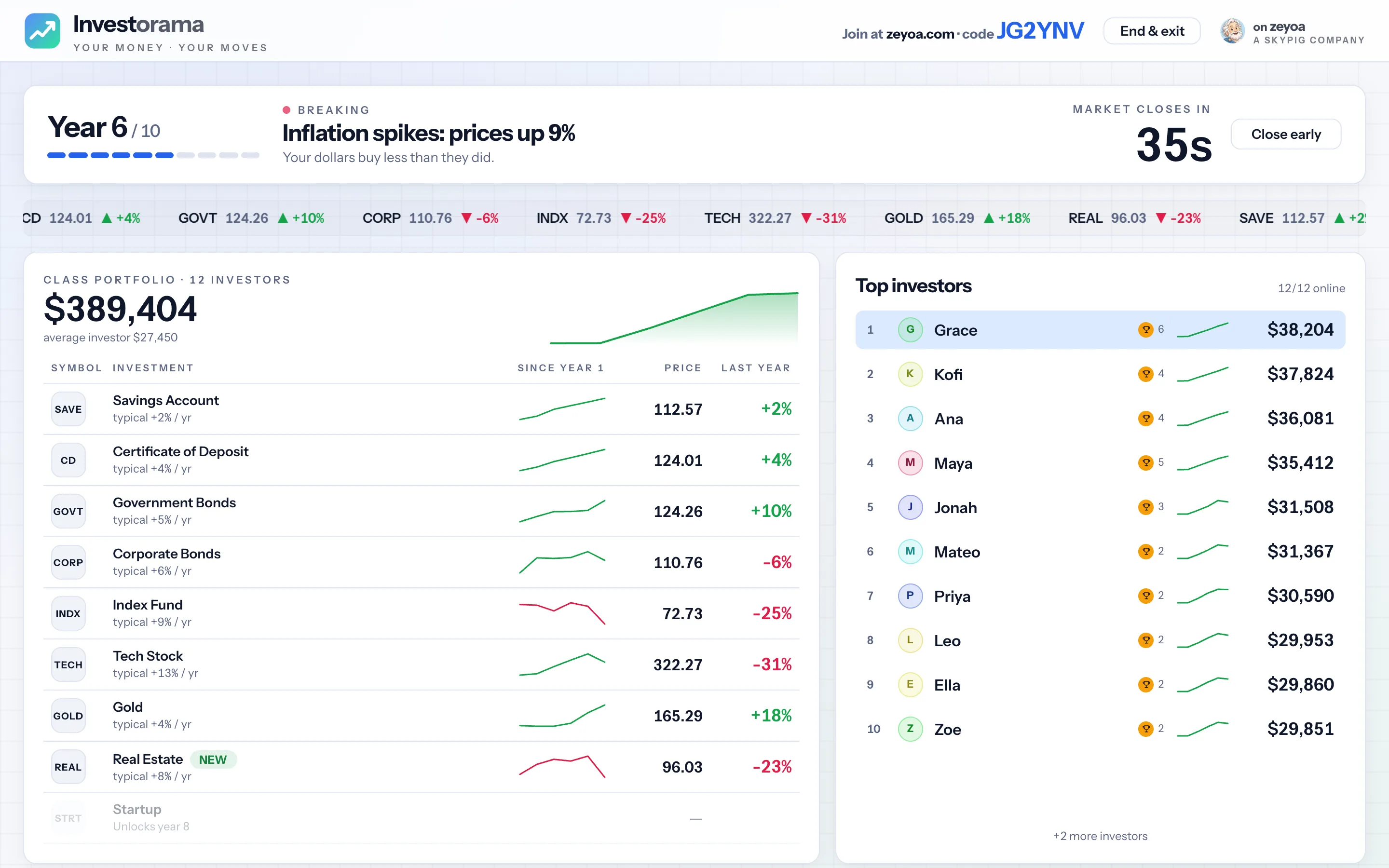
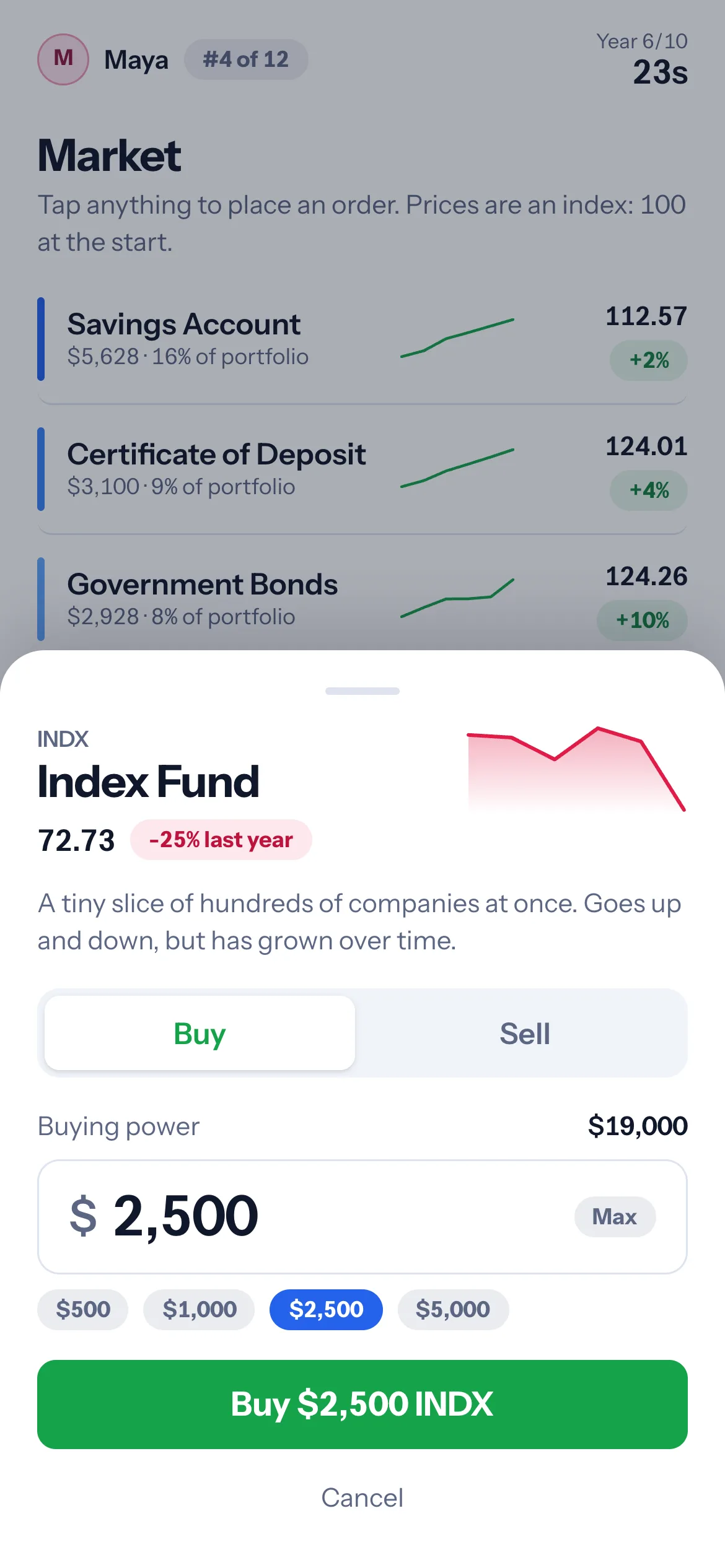
Every student manages their own portfolio on their device while the whole class rides the same market on the big screen. Savings, bonds, index funds, stocks, gold, real estate and a risky startup unlock as the years roll by. News events shake the market each year. Highest net worth at year 20 wins, and the recap shows why.
Screenshots
What students learn
- ✓Why cash under the mattress loses to almost any investment over 20 years
- ✓How risk and reward move together, and what a crash does to an all-in bet
- ✓Why spreading money across investments protects you from one bad year
- ✓How to read a headline and decide what it means for your money
How it works
- 1You host the game on the projector. Students join on their phones with the code.
- 2Each round is one year. A news headline hits the market on the big screen.
- 3Every student moves their own money between savings, bonds, index funds, stocks, gold, real estate and a risky startup. New options unlock as the years go by.
- 4The market moves. Everyone sees their own net worth change on their phone, and the board shows how each investment did.
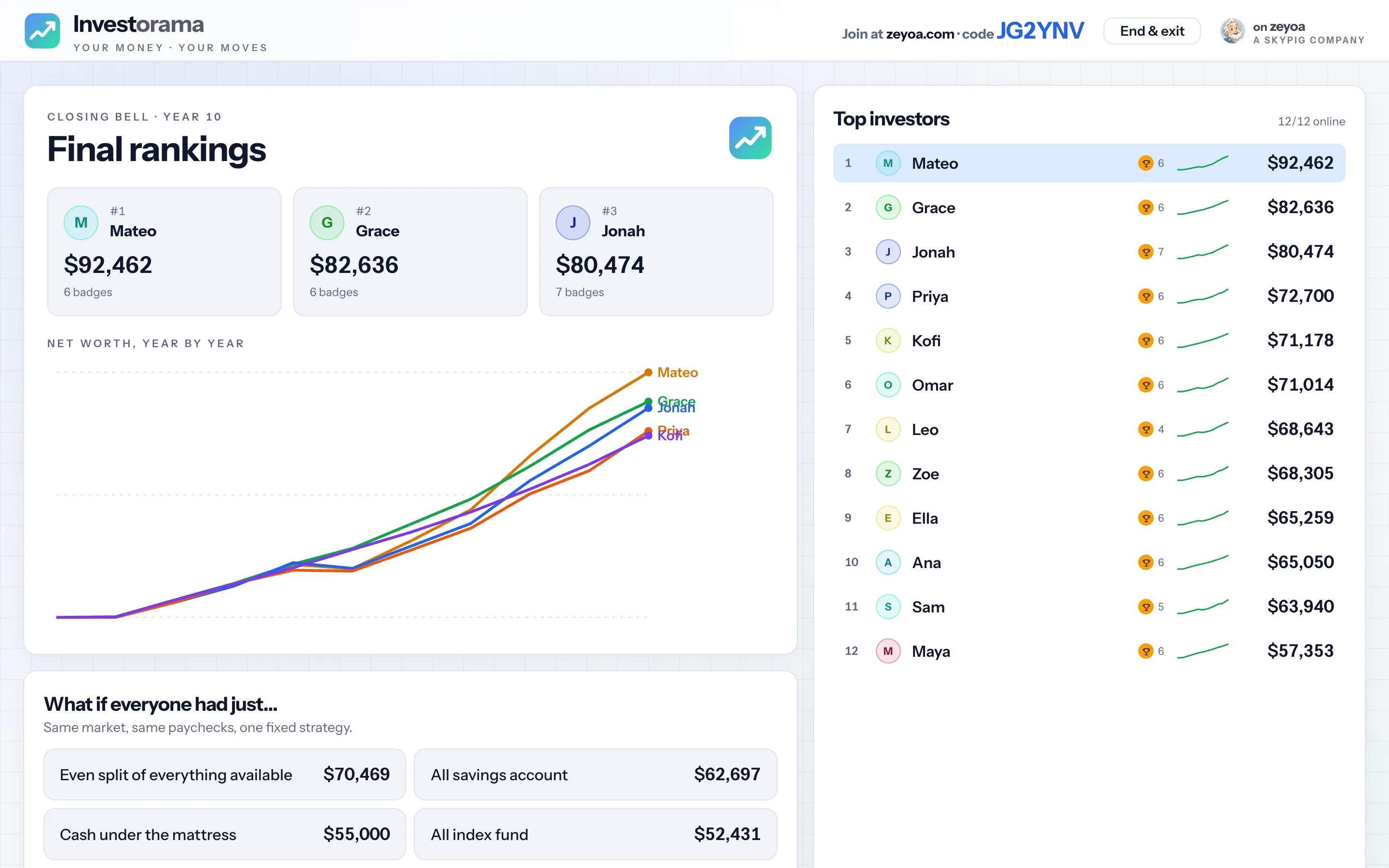
- 5After year 20, the recap ranks the class by net worth and shows which choices paid off and why.
A 35-minute lesson plan
Ask the class: if someone gave you $1,000 today, what would you do with it? Write a few answers on the board. Keep them up for the end.
Play all 20 years (about 20 minutes). Pause once after the first crash and ask who moved their money out, and who stayed in.
Use the recap to compare the top and bottom portfolios. Go back to the answers from the start: which would have won?
Discussion questions
- Who kept everything in savings? How did that work out over 20 years, and why?
- What happened to people who put everything in one investment when a crash hit?
- Did any headline make you change your plan? Was that a good move in hindsight?
- Why does money invested early grow so much more than money invested late?
Teacher tips
- Works with as few as 2 players, so you can also run it with a small group or one-on-one.
- Run it twice a few weeks apart. Most students change their strategy the second time, which is the best evidence they learned something.
Questions teachers ask
Is this real money or real stock prices?+
No. It's play money in a simulated market, so nothing is at risk and the results are different every game.
Do students need to know anything about investing first?+
No. The game opens with a short briefing on the board, and each investment explains itself when it unlocks.
More answers in the help center.