
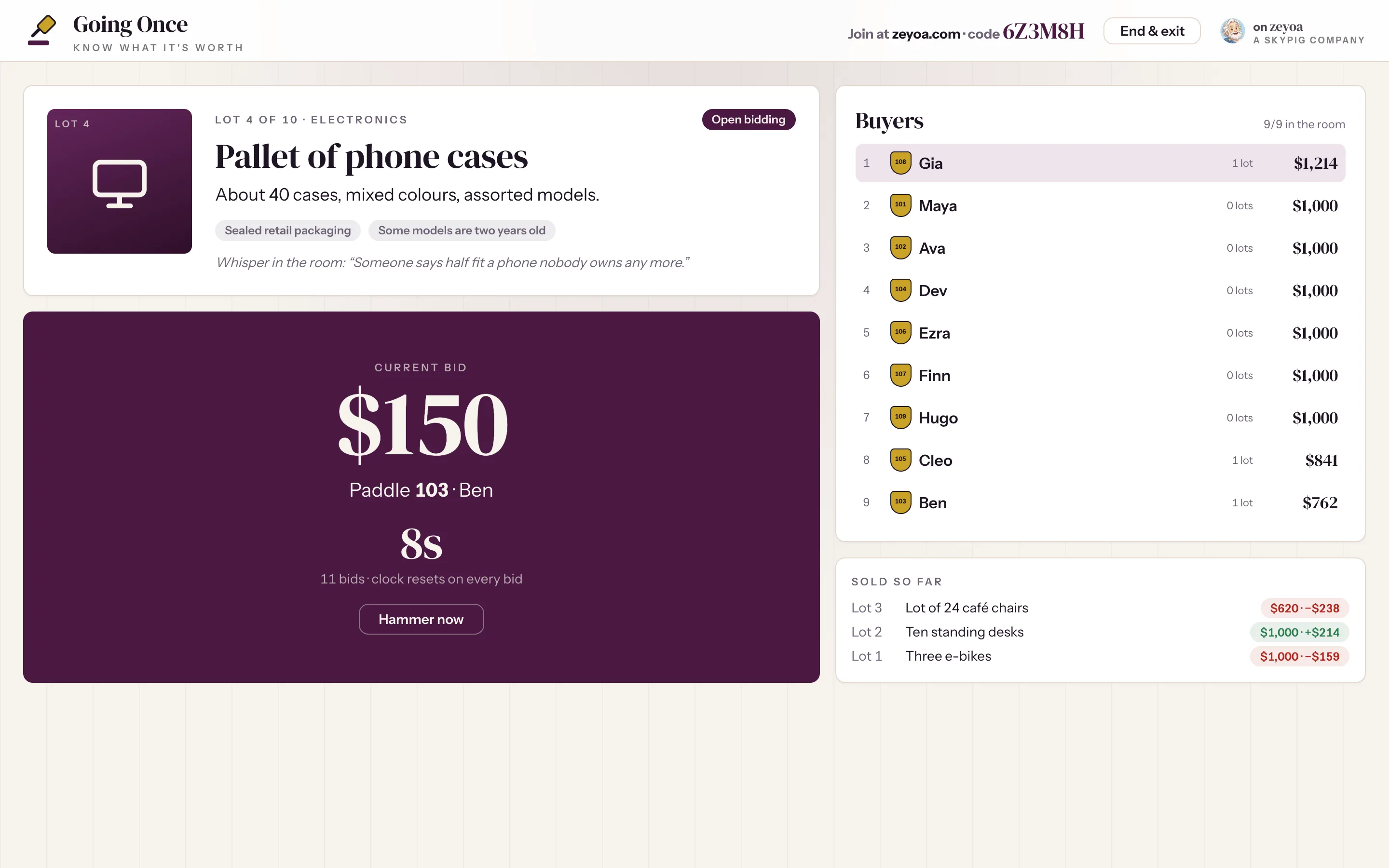
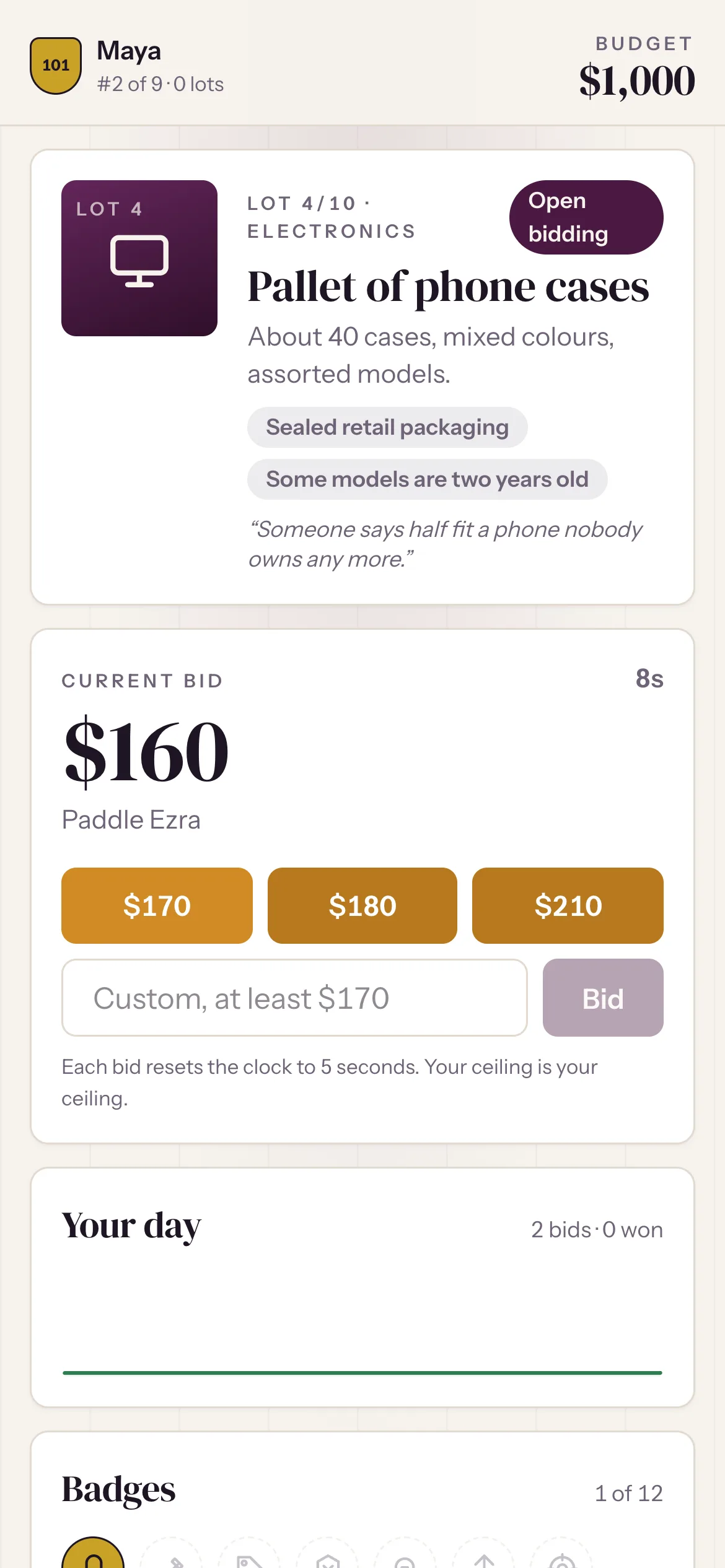
The class is a room full of buyers at an auction house. Lots come up on the board one at a time, each something a small business could resell, with a few facts and sometimes a rumor. Students bid from their phones in open bidding, sealed bids and Dutch auctions. After every hammer the true value is revealed. Buy under it and profit; overpay and meet the winner's curse. Needs at least 3 players.
Screenshots
What students learn
- ✓How to decide what something is worth before the bidding starts
- ✓The winner's curse: why the highest bidder is usually the one who guessed wrong
- ✓How open, sealed and Dutch auctions change the way people bid
- ✓Why spending your budget early means missing the best lot later
How it works
- 1Every student starts with the same budget.
- 2Lots come up on the board one at a time, each with a few facts and sometimes a rumor.
- 3Students bid on their phones. The auction style changes: open bidding, sealed bids and Dutch auctions.
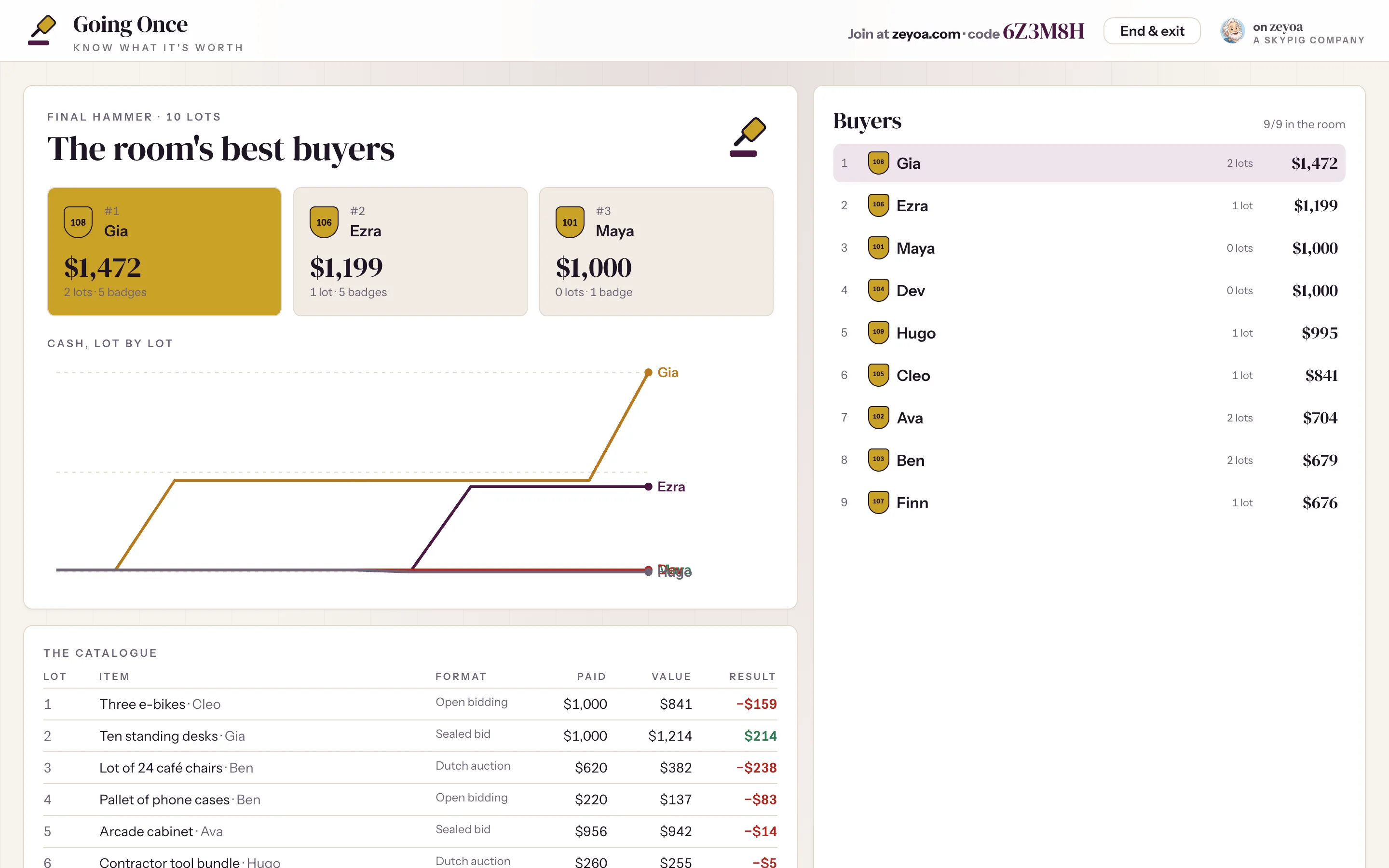
- 4After each sale the true value is revealed. Buying under it is profit; overpaying is a loss.
- 5The recap shows who made the most profit and where the class overpaid.
A 30-minute lesson plan
Hold up any object and ask the class to write down what it's worth. Compare the guesses: why are they so different?
Play the full game (about 15 minutes). After the first big overpay, stop and name it: the winner's curse.
Ask the biggest winner and a big overpayer to explain how they decided what to bid.
Discussion questions
- Why does the person who wins an auction often pay too much?
- How did sealed bids change your strategy compared to open bidding?
- Did anyone spend their budget early and miss a great lot later?
- Did a rumor change what you bid? Was it true?
Teacher tips
- Ask students to write down their maximum bid before each lot opens. It makes the winner's curse obvious when they break their own limit.
Questions teachers ask
What's a Dutch auction?+
The price starts high and drops until someone buys. The game explains each auction type on the board before it starts.
How many players do I need?+
At least 3. It works with a full class.
More answers in the help center.