
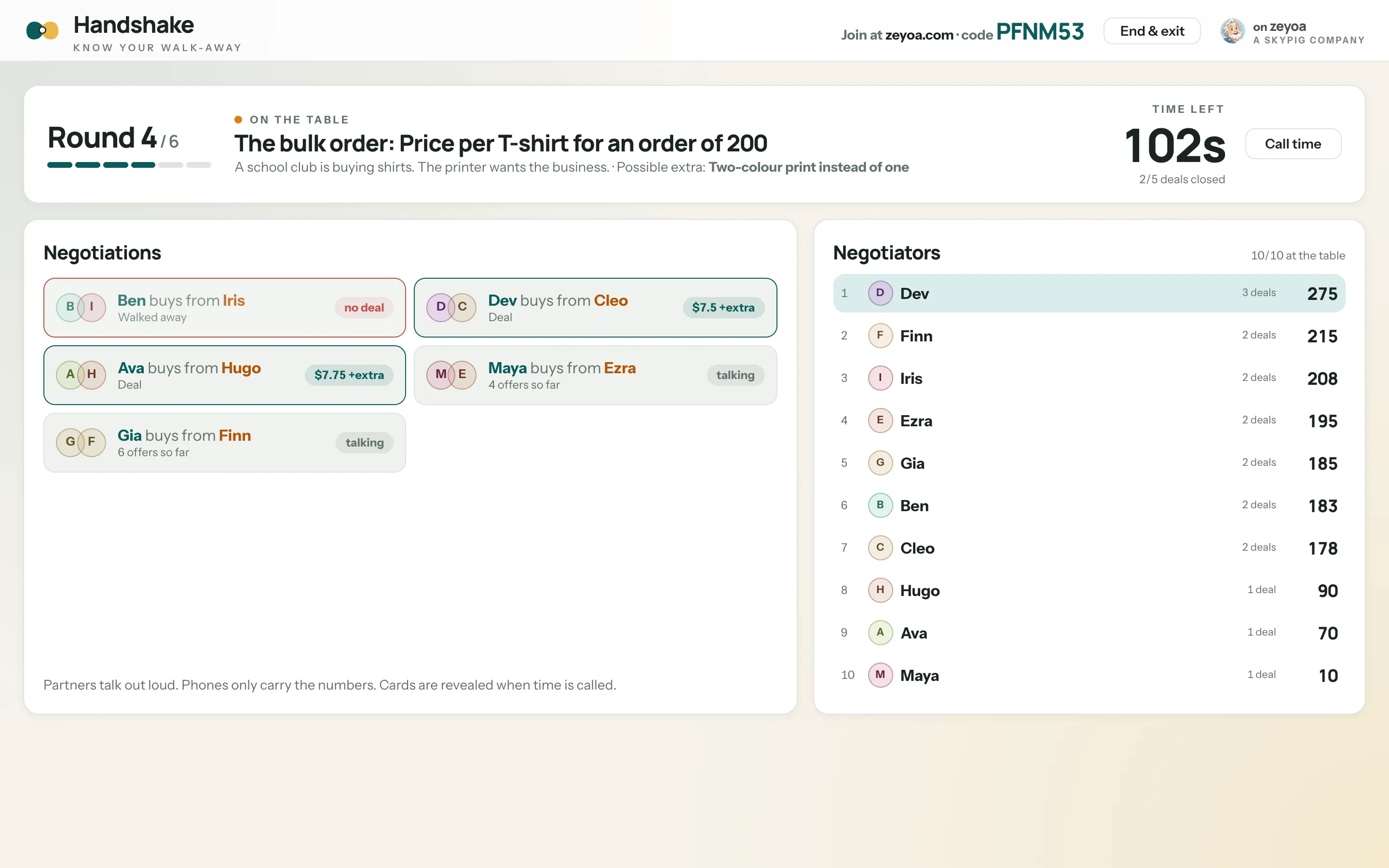
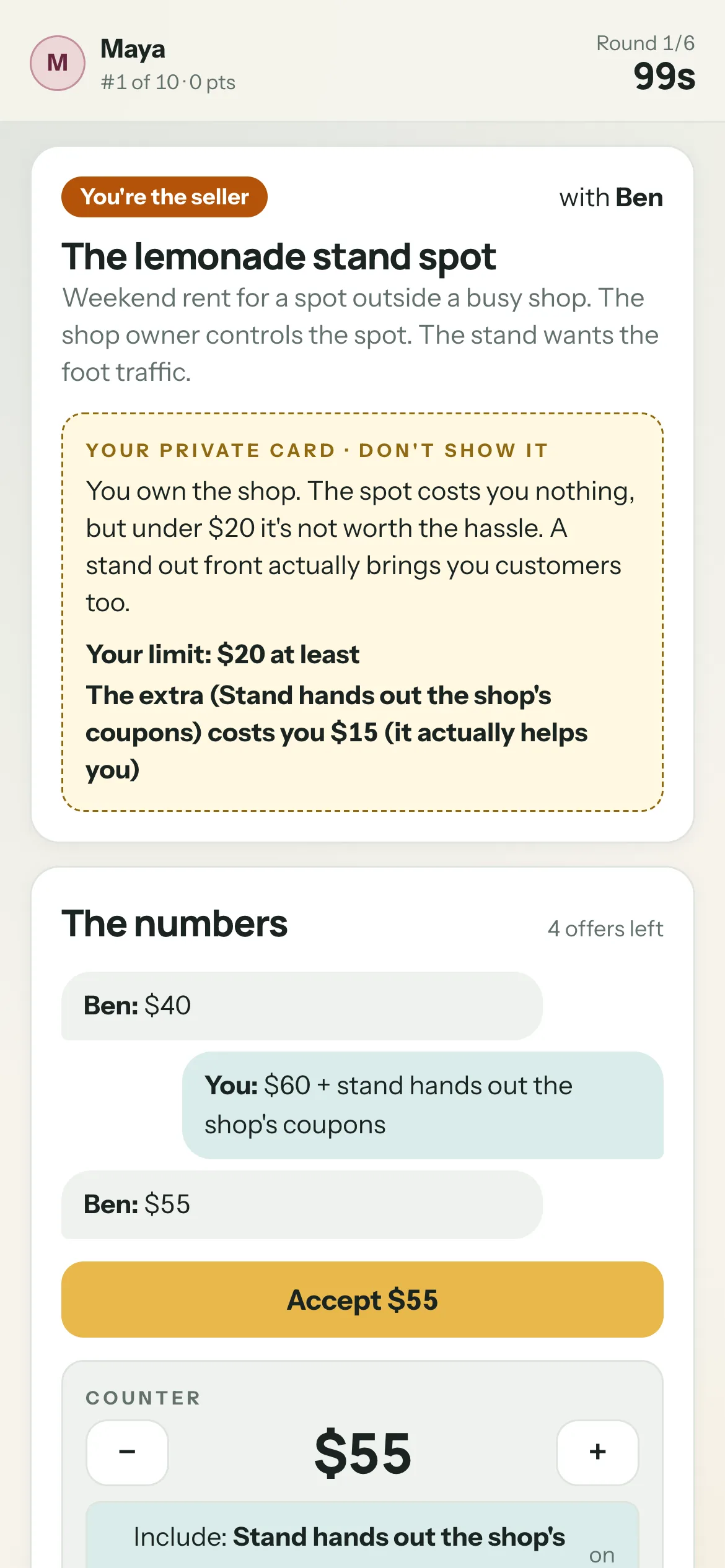
Every round the class is paired up. One buys, one sells, and each gets a private card the other can't see: what the deal is worth to them and the number they must never cross. They negotiate out loud across the room and use their phones only for the numbers: propose, counter, accept, or walk. After the round both cards are revealed and the board shows where every deal landed in the zone. One round has no deal zone at all, and walking away is the winning move. Needs at least 4 players; an odd student observes and rotates in.
Screenshots
What students learn
- ✓Decide your walk-away number before you say a word, and never cross it
- ✓The first number spoken pulls the final price toward it
- ✓Ask questions before you make an offer; every answer hints at their limit
- ✓Trade extras that are cheap for you and valuable to them instead of just splitting the difference
How it works
- 1Each round, the class is paired up. One student buys, one sells.
- 2Each gets a private card on their phone: what the deal is worth to them and the number they must never cross.
- 3They negotiate out loud, then use their phones to propose, counter, accept or walk away.
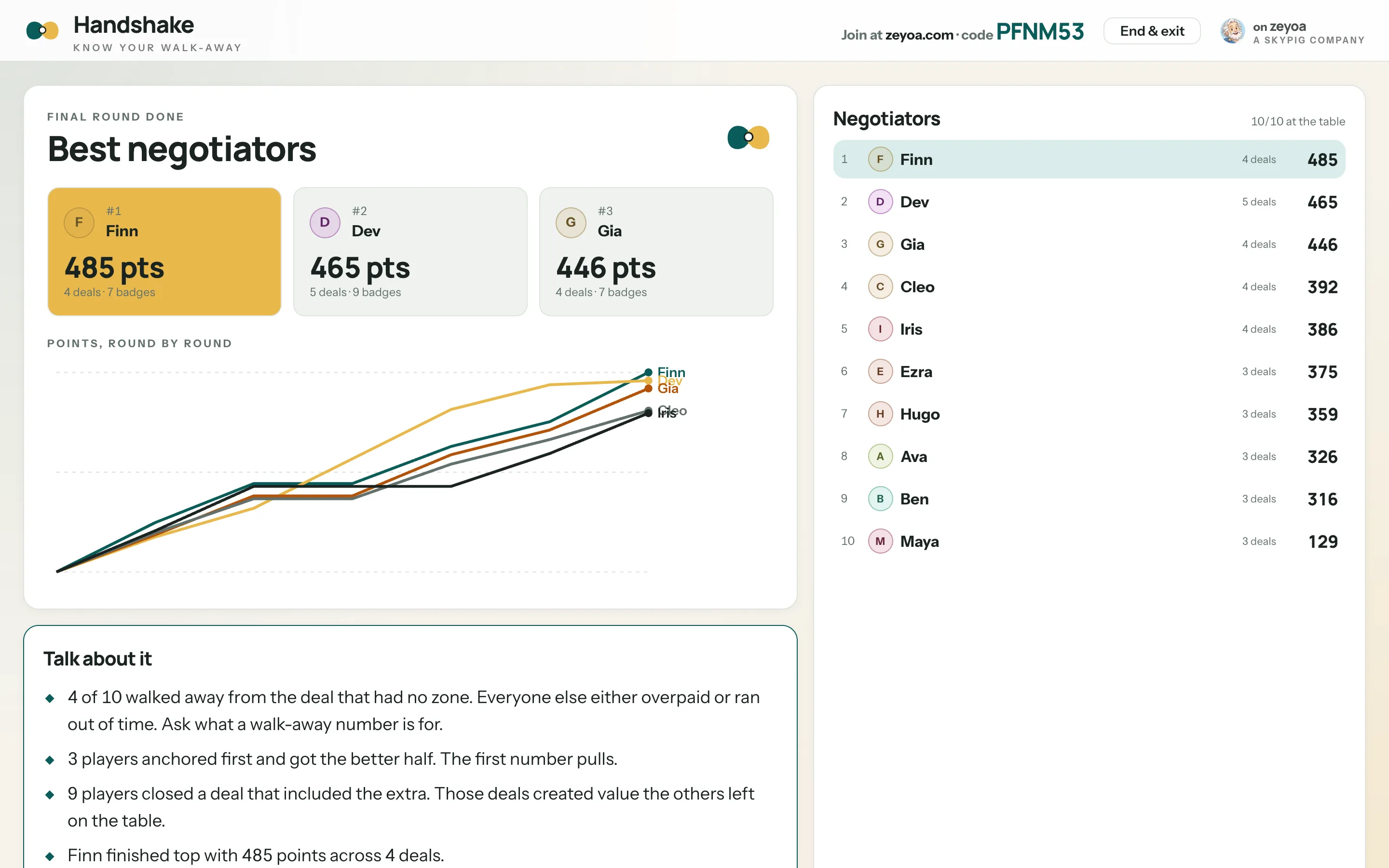
- 4After the round, both cards are revealed, and the board shows where every deal landed.
- 5One round has no possible deal, and walking away is the winning move.
A 35-minute lesson plan
Ask: when you're buying something, should you name a price first, or wait for the other person? Take a few opinions.
Play every round (about 20 minutes). After the round with no deal zone, ask who walked away and who gave in.
Show the chart of where deals landed. Ask the students who got the best deals what they said first.
Discussion questions
- Why should you decide your walk-away number before you start talking?
- Did the first number anyone said pull the final price toward it?
- What questions helped you figure out the other person's limit?
- When is walking away the best result?
Teacher tips
- Needs at least 4 players. With an odd number, one student observes each round and rotates in.
- Mix up pairs so quiet students negotiate with different classmates each round.
Questions teachers ask
What's a BATNA?+
Your best alternative to a negotiated agreement: what you'll do if there's no deal. In the game, it's the number on your card you must never cross.
Is it okay if the room gets loud?+
Yes. Students negotiate out loud in pairs. The phones only handle the numbers.
More answers in the help center.