
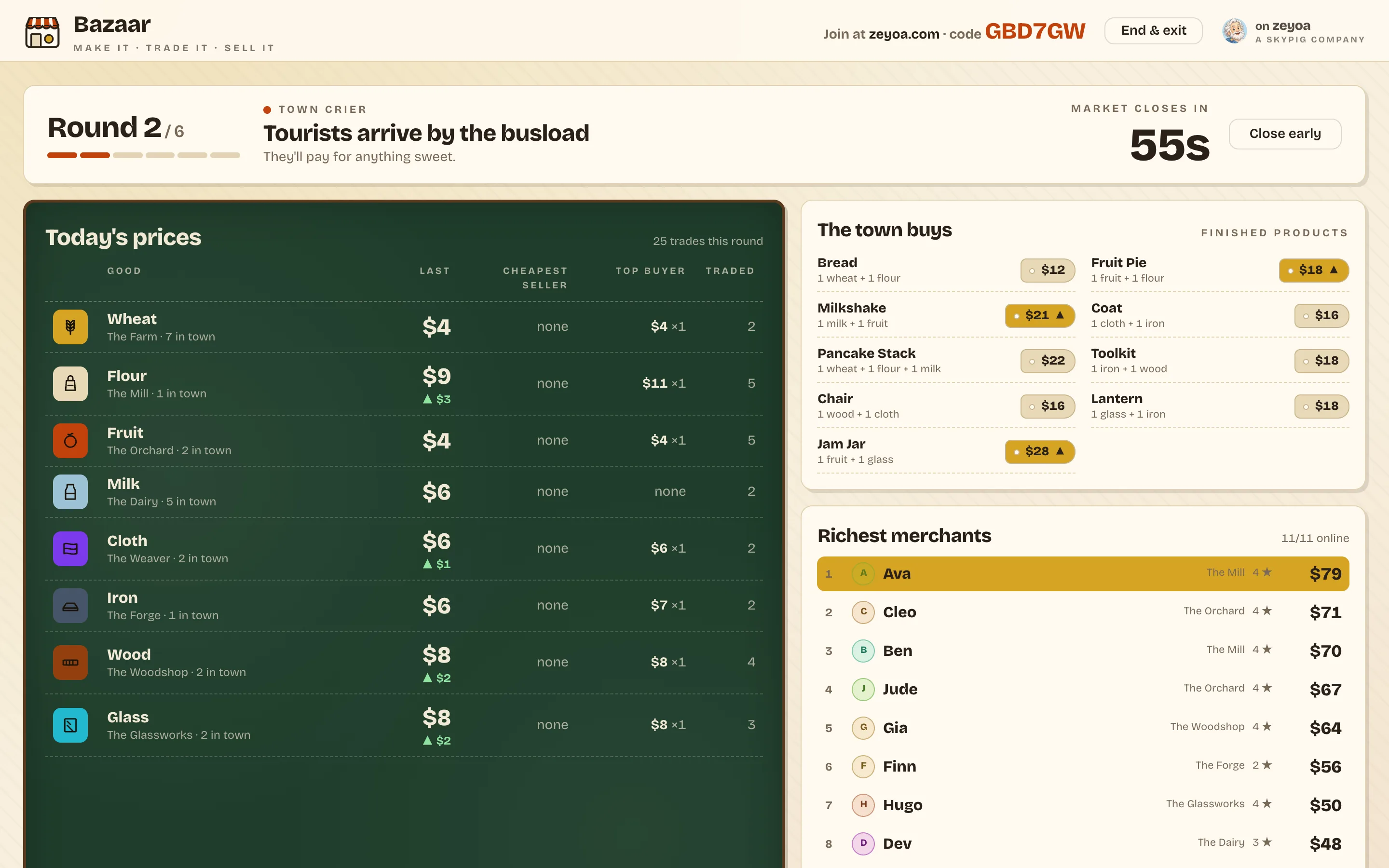
Every student runs a shop that makes one raw good. Cash only comes from finished products that need goods from other shops, so the whole class has to trade. There is no price list: wheat costs whatever a classmate will pay. Supply, demand, scarcity and negotiation happen live on the board. Needs at least 6 players so every recipe can be completed; 12 or more is best.
Screenshots
What students learn
- ✓Where prices actually come from: what a buyer and a seller agree on
- ✓What happens to a price when a good becomes scarce, or floods in
- ✓Why specialization and trade make everyone richer than going it alone
- ✓How to post an offer, take one, and negotiate a fair deal
How it works
- 1Every student runs a shop that makes one raw good, like wheat or wood.
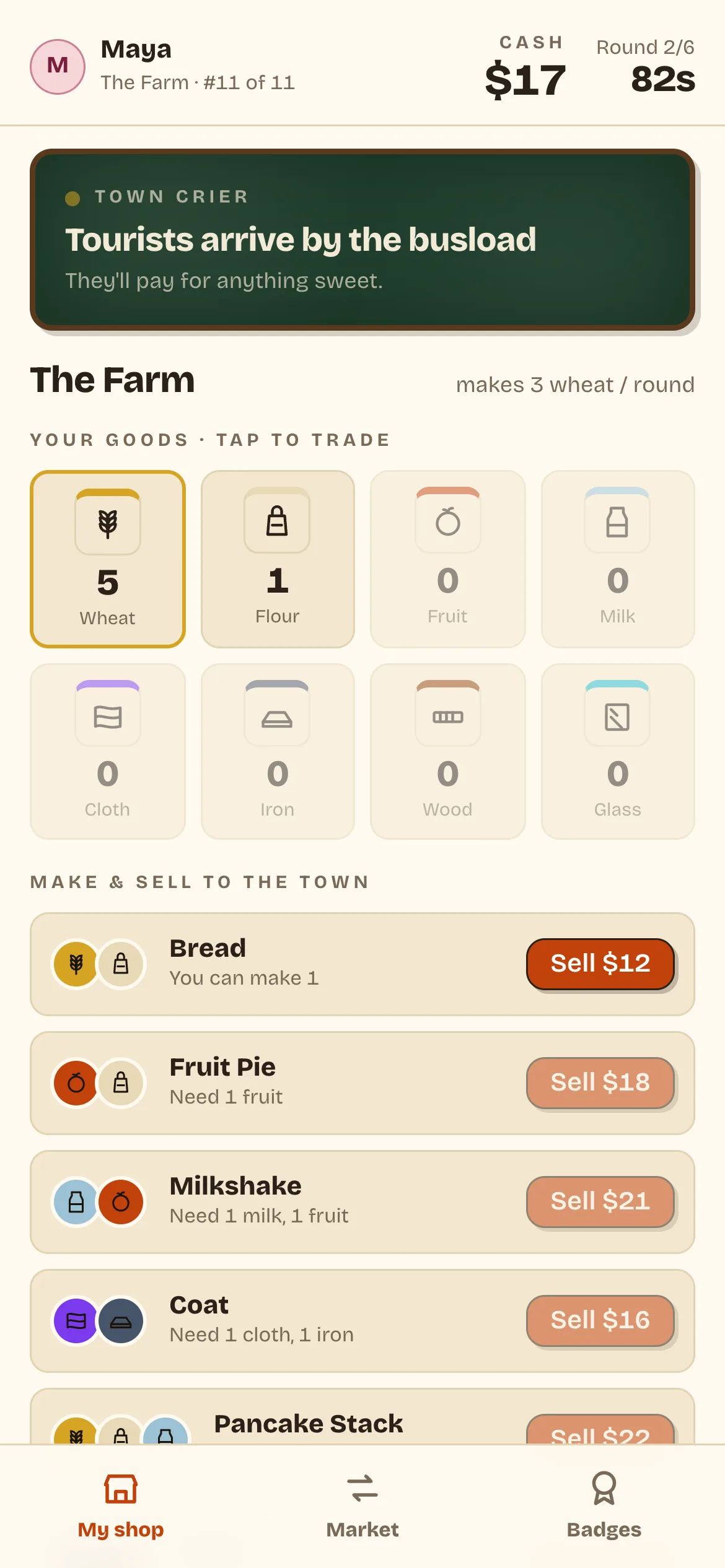
- 2Cash only comes from finished products, and every recipe needs goods from other shops.
- 3Students post offers and take deals on their phones. There's no price list: a good is worth whatever a classmate will pay.
- 4The board shows prices rising and falling as goods become scarce or flood the market.
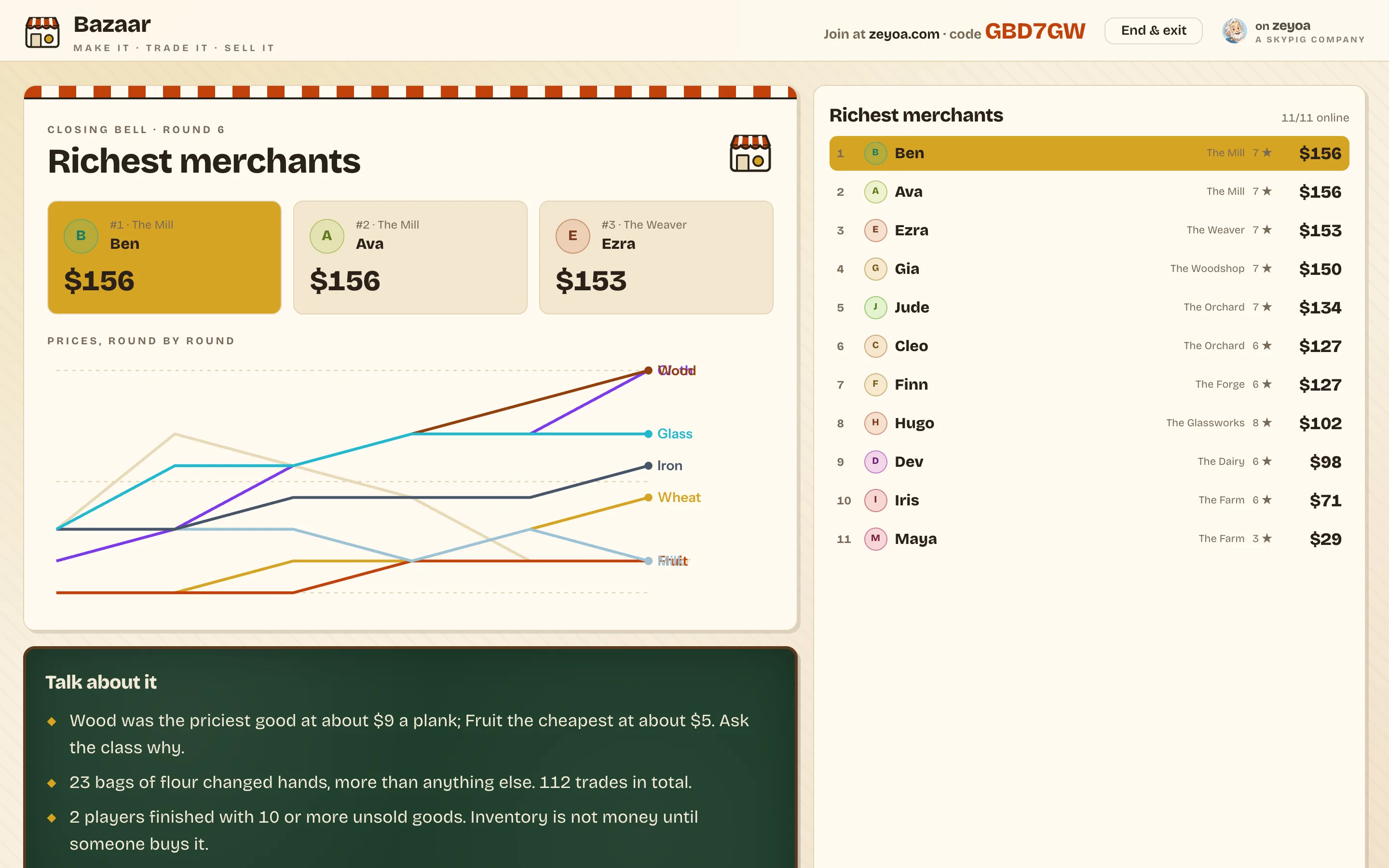
- 5At the end, the richest shop wins and the recap shows the price history of every good.
A 30-minute lesson plan
Ask: who decides what a bottle of water costs? Take a few answers, then tell them that today they're going to set prices themselves.
Play one full game (about 15 minutes). Let the room get loud: negotiating out loud is part of it.
Put the price chart on the board. Find a moment where a price jumped, and ask the class what caused it.
Discussion questions
- Which good became the most expensive? Why?
- Did anyone try to make everything themselves? How did that go compared to trading?
- What made you accept a deal, or walk away from one?
- Where do you see this happening in real life (concert tickets, game consoles at launch, gas prices)?
Teacher tips
- Needs at least 6 players so every recipe can be completed. 12 or more is best.
- Let students walk around and negotiate face to face. The phone is just for posting and accepting deals.
Questions teachers ask
What if a student can't get the goods they need?+
That's scarcity, and it's part of the lesson. They can offer more, trade something else, or team up. Prices adjust as the game goes.
How many students can play?+
Six up to a whole class. More players means a busier, more realistic market.
More answers in the help center.