
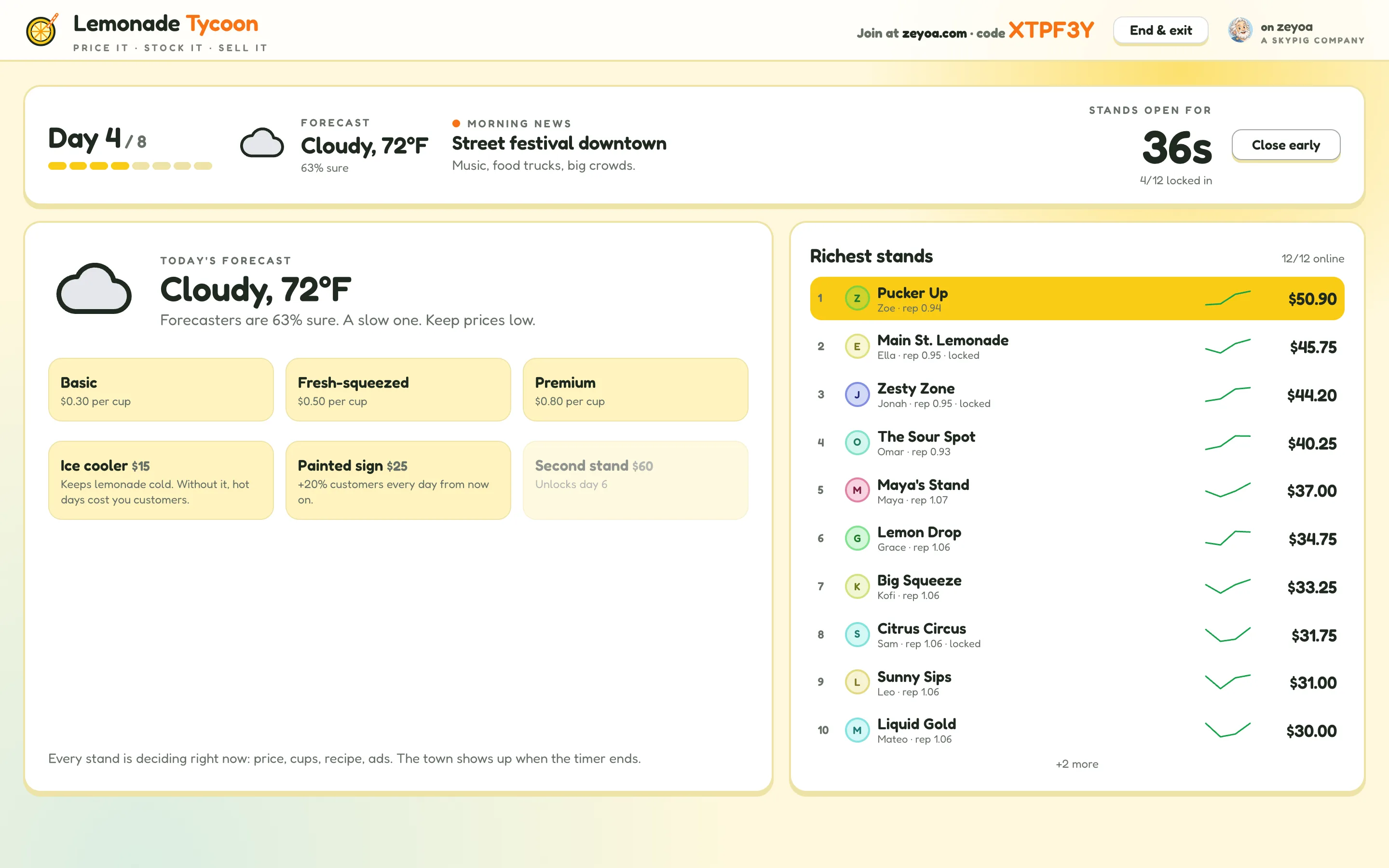
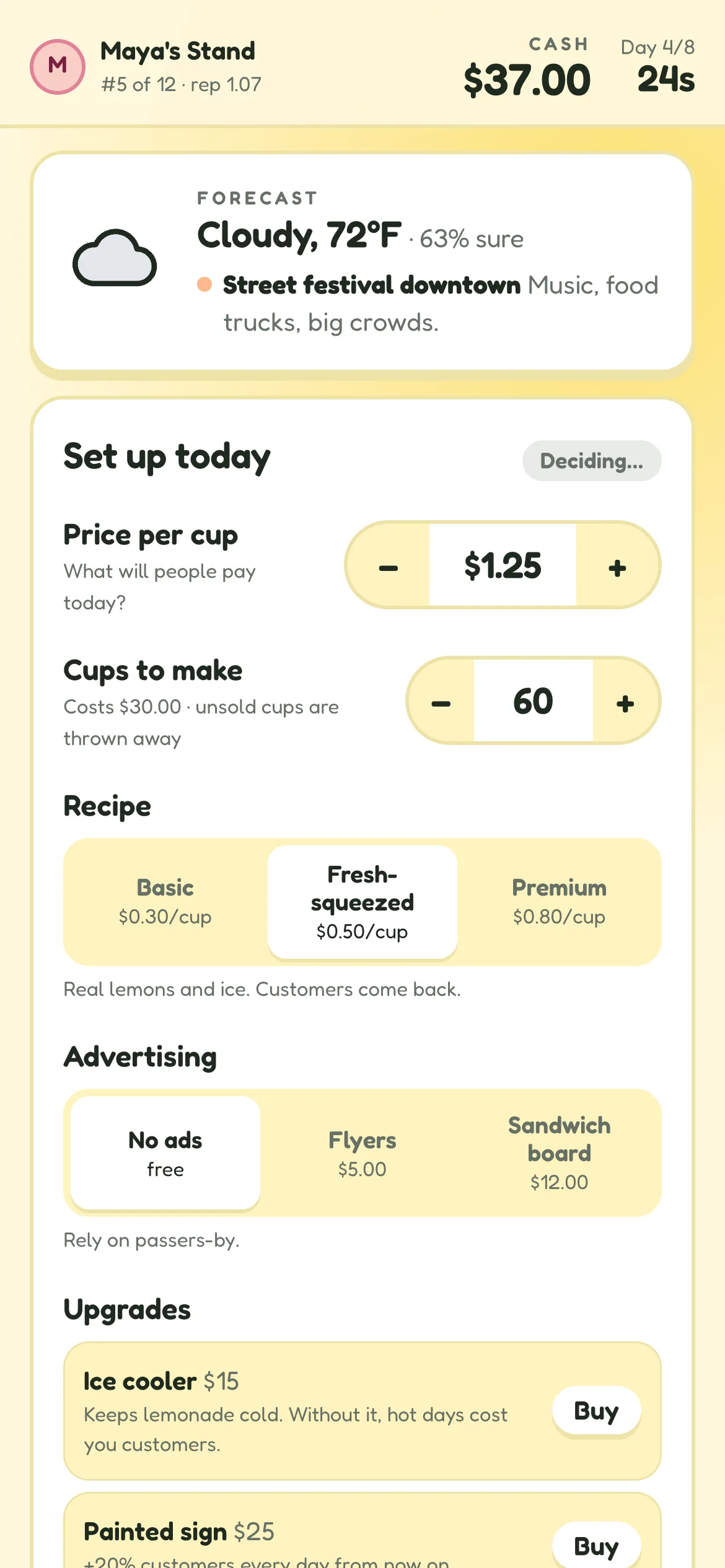
Every student runs a lemonade stand in the same town for one summer. Each morning brings a forecast and a headline; each student sets a price, decides how many cups to make, picks a recipe and chooses whether to advertise. Then the town shows up, or doesn't. Profit, waste, reputation and the price-demand trade-off, learned one day at a time.
Screenshots
What students learn
- ✓Profit is revenue minus every cost, and unsold stock is money thrown away
- ✓Raising the price sells fewer cups; the best price is where price × sales peaks
- ✓How to plan for a forecast without betting everything on it
- ✓Why happy customers come back and bring friends
How it works
- 1Every student runs their own lemonade stand in the same town.
- 2Each morning the board shows a weather forecast and a headline.
- 3Students set a price, decide how many cups to make, choose a recipe and decide whether to advertise.
- 4The town shows up, or doesn't. Each student sees their sales, waste and profit for the day.
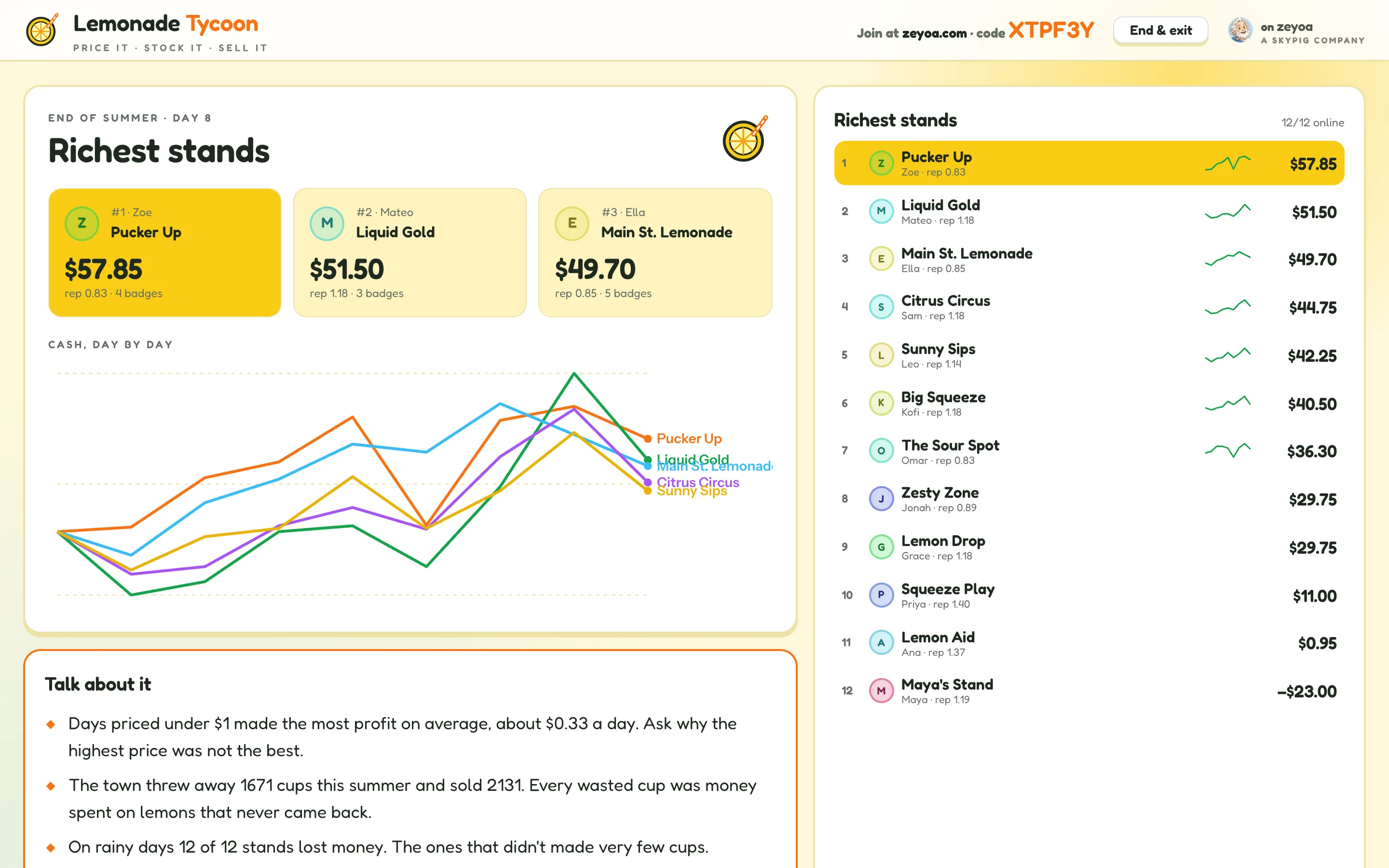
- 5After the summer, the recap ranks every stand by profit and shows what the winners did differently.
A 30-minute lesson plan
Ask: if you sold lemonade, how much would you charge? Then ask: what would happen if you charged $10? Or 5 cents?
Play the full summer (about 15 minutes). Pause on a rainy day and ask who made too many cups.
Have students work out their own profit for one day by hand: revenue minus costs. Compare with what the game showed.
Discussion questions
- What happened when you raised your price? When you lowered it?
- Why is making too many cups as bad as making too few?
- Did advertising pay for itself?
- What's one thing you'd do differently if you ran a real stand?
Teacher tips
- Works with a single player too, so students can replay it at a computer station.
- Pair younger students up so they talk through each decision together.
Questions teachers ask
Is it too hard for 4th graders?+
No. There are only four choices a day, and the game shows the result straight away. Younger classes do well in pairs.
Does every student get the same weather?+
Yes. Everyone faces the same town and forecast, so the differences in results come from their decisions.
More answers in the help center.